The Certification Visibility Problem
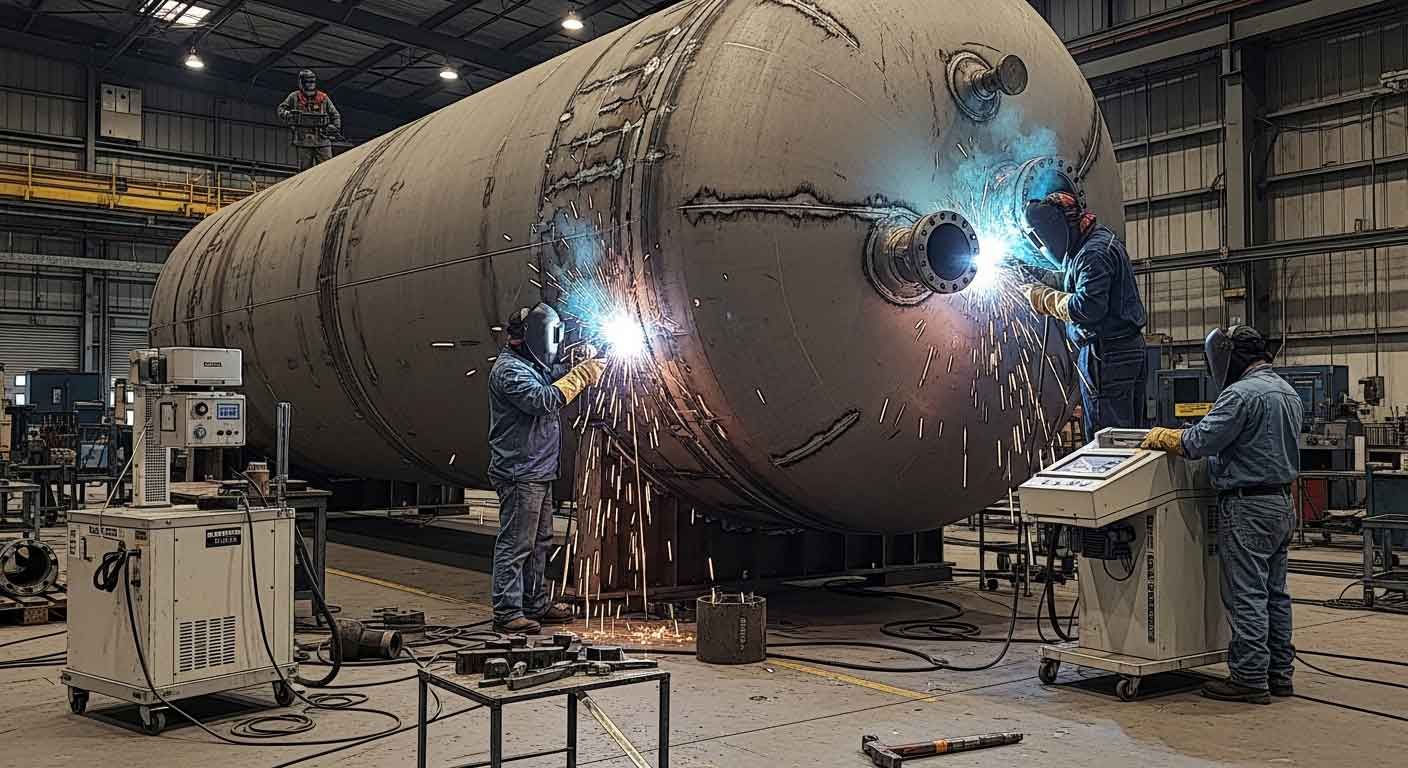
I see ASME code shops burying their most valuable credentials in footer text or PDF capability statements. U-stamps, R-stamps, National Board registration. The certifications that qualify fabricators for pressure vessel and heat exchanger projects get relegated to downloadable documents that EPC contractors won't find during initial website evaluation.
This positioning wastes the premium these certifications command. ASME code work bills at higher rates because inspection rigor, weld procedure documentation, and regulatory compliance capability require specialized infrastructure and qualified personnel. When these credentials hide in footer space, procurement managers evaluating fabrication partners can't verify code shop qualification without digging through PDFs.
The pattern I observe is
pressure vessel and tank fabricators displaying certifications as badges alongside quality awards and trade association memberships. ASME stamps deserve different treatment. They're not participation credentials. They're regulatory qualifications that determine which projects you're legally permitted to bid.
Why Code Certifications Command Premiums
ASME certification signals third-party audited compliance with design, fabrication, and inspection standards. Pressure vessels and heat exchangers operating under regulated conditions require fabricators who maintain weld procedure qualification records, employ authorized inspectors, and document material traceability per code requirements.
This infrastructure costs money to maintain. PQR libraries, qualified welders, authorized inspector relationships, and hydrostatic testing facilities represent ongoing operational expenses that non-code shops don't carry. The premium code work commands reflects these compliance costs plus the regulatory liability code shops accept.
EPC contractors pay premium rates because code fabrication reduces project risk. A fabricator holding valid ASME stamps has already passed third-party inspection of their quality systems, welding procedures, and shop capabilities. This verification transfers liability from the EPC contractor to the stamp holder and the National Board. The premium isn't arbitrary. It reflects the compliance infrastructure and regulatory responsibility code shops maintain.
What EPC Contractors Verify First
Procurement managers qualifying fabricators for pressure vessel projects check three things before requesting detailed capabilities or pricing. U-stamp certification for new construction. R-stamp certification for repairs and alterations. National Board registration number that confirms current authorization.
These credentials answer whether the fabricator is legally qualified to bid. Without valid stamps, the conversation stops. With valid stamps, procurement moves to evaluating shop capacity, equipment capabilities, and schedule availability.
I find fabricators sometimes list ASME certification without specifying which stamps they hold or displaying National Board registration numbers. This creates unnecessary friction. Procurement teams need to verify stamp validity through the National Board database. Making them search for registration numbers when this information should appear prominently on your website adds steps to their qualification process.
What I recommend for
ASME code shops is stating stamp certifications explicitly in hero sections and service descriptions. "ASME U-stamp certified pressure vessel fabrication" or "National Board R-stamp holder for repairs and alterations." Include registration numbers. Link to National Board verification if you want to remove all friction from the qualification process.
Strategic Positioning for Code Credentials
Code certifications perform best in hero sections where EPC contractors land first. When I review fabricator websites, I see stamps placed in footer text alongside social media icons and privacy policies. This positioning communicates that ASME certification is supplementary information rather than primary qualification.
The placement should reflect the business reality. Code work represents premium revenue. Pressure vessel fabrication and heat exchanger repairs bill at rates that justify the compliance infrastructure code shops maintain. When certifications appear as afterthoughts in footer space, the website doesn't communicate this premium positioning.
What works better is leading with code credentials in the same space where value propositions appear. "ASME U-stamp and R-stamp certified fabricator specializing in pressure vessels and heat exchangers for petrochemical, power generation, and refining applications." This positioning signals immediately that you're qualified for code work and that code work is your focus.
I've learned that fabricators holding multiple stamps sometimes list them without context. "U, R, S, PP stamps" tells qualified buyers what you're authorized to do. But procurement managers who don't work with code shops daily may not know what S-stamps or PP-stamps authorize. Adding brief descriptions removes ambiguity. "U-stamp for pressure vessels, R-stamp for repairs, S-stamp for power boilers, PP-stamp for pressure piping."
How Code Certification Differs From Quality Claims
Every fabricator emphasizes quality. "Quality workmanship." "Commitment to excellence." "Precision fabrication." These statements are generic because any shop can make them. ASME stamps are different. They prove third-party audited compliance with specific design, fabrication, and inspection standards.
The National Board doesn't issue stamps based on your marketing claims. They inspect your shop, review your quality manual, verify your welding procedures, and audit your inspection documentation. Stamps represent passed inspection by authorized inspectors who verify your systems meet code requirements.
This distinction matters for positioning. Quality claims compete against every other fabricator making similar claims. Code certifications stand alone. You either hold valid stamps or you don't. The National Board database confirms it. This verification eliminates the credibility gap that generic quality claims create.
What I see fabricators miss is using code certification to differentiate from quality-focused messaging. Instead of "quality pressure vessel fabrication," the positioning should be "ASME U-stamp certified pressure vessel fabrication with documented weld procedures and authorized inspector oversight." The second statement proves the quality claim through regulatory compliance rather than asking buyers to trust your assertion.
Essential Code Shop Signals Beyond Stamps
ASME certification proves you're qualified to fabricate code work. But EPC contractors evaluating fabricators for specific projects need to verify additional capabilities. PQR documentation that demonstrates qualified welding procedures for the materials and processes their project requires. Design review expertise when fabrication involves engineering input. Hydrostatic testing facilities for pressure testing completed vessels.
These capabilities determine whether a code shop can handle the specific work being sourced. I find fabricators often assume stamps alone communicate complete capability. But a U-stamp holder might specialize in carbon steel pressure vessels and lack the PQRs or equipment for stainless steel or exotic alloy work. Procurement needs to verify these specifics before including you in the bid list.
The
content marketing strategy I recommend is documenting these capabilities explicitly. List the materials you've qualified welding procedures for. State your design pressure and temperature ranges. Specify your hydrostatic testing capacity. Mention NDE capabilities if you perform radiography, ultrasonic testing, or magnetic particle inspection in-house.
This documentation helps procurement managers qualify your shop faster. They're comparing multiple fabricators. The shop that clearly communicates "qualified for carbon steel, stainless steel, and duplex stainless through 3 inches thick, design pressures to 5,000 PSI, hydrostatic testing to 7,500 PSI" gets added to the bid list faster than the shop that just says "ASME certified fabrication."
Positioning Code Credentials Effectively
The positioning hierarchy I recommend puts ASME stamps in the hero section, expands on code capabilities in service descriptions, and includes National Board registration numbers prominently. This structure mirrors how procurement evaluates fabricators. First, are they code certified? Second, what's their specific capability range? Third, can I verify their certification status?
Leading with stamps in the hero section answers the qualification question immediately. EPC contractors sourcing code work can verify you're a viable candidate without scrolling. Service pages expand on specific capabilities. "Pressure vessel fabrication" becomes "ASME U-stamp certified pressure vessel fabrication for carbon steel, stainless steel, and duplex stainless, design pressures to 5,000 PSI, single-piece construction to 14 feet diameter."
I notice fabricators sometimes create separate "certifications" pages that list ASME stamps alongside ISO 9001, safety certifications, and trade memberships. This grouping dilutes the differentiating power of code credentials. ISO 9001 is a quality system standard any shop can pursue. ASME stamps are regulatory qualifications that require specialized infrastructure and authorized inspector oversight. They deserve different positioning than quality certifications.
The approach I've seen work is integrating code credentials into service positioning rather than isolating them on certification pages. Your pressure vessel fabrication page should lead with U-stamp certification. Your repair services page should highlight R-stamp authorization. This integration connects credentials directly to the services they enable rather than treating them as background information.
Repositioning Code Credentials for Premium Work
This positioning shift requires restructuring how code certifications appear throughout your website. Moving stamps from footer space to hero sections. Expanding service descriptions to include specific code capabilities. Adding National Board registration numbers where procurement managers expect to find them.
Sometimes fabricators need external perspective to identify what's missing from their code shop messaging. The certifications that feel obvious internally don't always communicate qualification effectively to procurement teams working outside your specific sector.
Mansfield Marketing works with ASME code shops to position certifications prominently as primary qualifications for pressure vessel and heat exchanger projects. We identify which code capabilities need emphasis and restructure website content to communicate them effectively to EPC contractors. Contact Mansfield Marketing to discuss repositioning your code shop credentials to attract premium fabrication projects by
requesting a quote or calling us at (713) 936-5557.