The Bid List Is Written Before the Outage
Plant turnaround and outage work rarely goes to whoever calls when the work starts. It goes to contractors on the owner's approved vendor list, the AVL, which the owner builds well before the outage. By the time a pipefitting contractor hears a unit is coming down, the list is usually set.
I see this timing problem across the
energy sector. Contractors market hardest when the work is visible, which is exactly when it's too late to get in.
The Timing Works Against Late Arrivals
Major turnarounds are planned well over a year out. Matterport's turnaround planning guide describes detailed scope work, including qualifying and scheduling contractors, ramping up 18 to 24 months before shutdown. Some operators run the AVL centrally and others site by site, but the pattern holds: the contractor pool is chosen long before the first flange is broken.
For
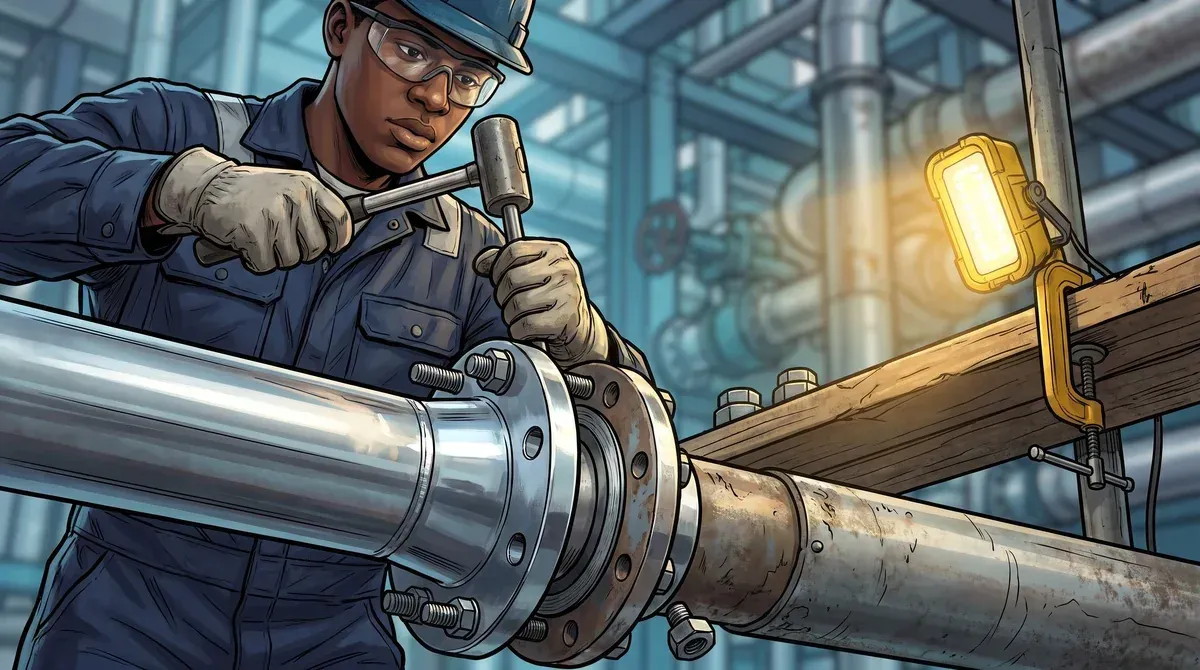
industrial pipefitting contractors, that means the sales window closes early. A contractor that first appears when the outage is announced isn't competing for that work. At best, it's getting noticed for the next one. Crews that also handle
oil and gas pipeline services face a similar prequalification process with midstream operators.
Two Ways Onto the List
There are two doors in. The first is directly onto the owner's AVL, as a prime or specialty contractor for the site. The second is onto a prime mechanical contractor's subcontractor list, which still requires passing the facility's own safety approval.
The second path is often the realistic first step. It's worth marketing to prime contractors as deliberately as to owners.
What Gets a Contractor Approved
Owners weigh roughly these factors, in roughly this order:
- Safety prequalification through a platform such as ISNetworld, Avetta, or Veriforce, and a safety record with an experience modification rate (EMR) below 1.0
- Past performance at that facility, or on similar units nearby
- Technical capability: carbon steel, stainless, chrome, and code work, with welding procedures and qualified welders to match
- Craft headcount by trade and shift, including the ability to staff nights
- Then price
Price comes last for a reason. A turnaround runs on a fixed window, and a contractor that can't staff the job or can't pass safety costs the owner far more than a higher rate would.
What Buyers Look for Online
Months before the outage, a turnaround manager, a category manager, or a site procurement lead is researching contractors. They look at websites. What I see on many pipefitting websites is a general contractor's site: "commercial and industrial piping," a photo of a pipe rack, a phone number. Nothing from the approval list above.
What I recommend publishing instead is the list itself, answered. The prequalification platforms the company is active on. EMR and incident rates by year. The materials and codes the crews work to, such as ASME B31.3 for process piping. Craft headcount by trade. The unit types where the crews have worked turnarounds, described by type when the site can't be named. And a clear contact for procurement, not just a general inbox.
Those specifics also give AI tools something to match when a procurement lead asks for pipefitting contractors with chrome experience and an EMR under 1.0 in a particular region.
Be on the List Before It's Written
Turnaround work is won long before the turnaround. The contractors on the bid list are the ones that were visible, qualified, and easy to verify a year or more earlier. Market to the list, not to the outage.
How Mansfield Can Help
Mansfield Marketing helps pipefitting and mechanical contractors publish the safety, capability, and craft details that turnaround managers and procurement teams check when they build approved vendor lists, as part of a holistic marketing strategy. Contact Mansfield Marketing to discuss getting on the turnaround bid list before it's written by
requesting a quote or calling us at (713) 936-5557.