The Short Answer on Whether an AI Assistant Names Your Crane Company
An AI assistant will put a specific crane and rigging company on a plant manager's shortlist when four things hold at the same time. The safety credentials are published as verifiable facts instead of badge graphics. The fleet is described by rated capacity and reach rather than by adjectives. The service area is stated in geography a machine can match. And the company's identity signals agree everywhere the company appears online. Break one and the model has nothing specific to attach to the company, so it recommends a company it can describe instead.
That is the whole mechanism.
Two problems get confused here. Ranking decides which page wins a query. Citation decides whether a model can state a fact about a company without guessing.
Marketing for heavy equipment companies has spent two decades on the first one. What I see across
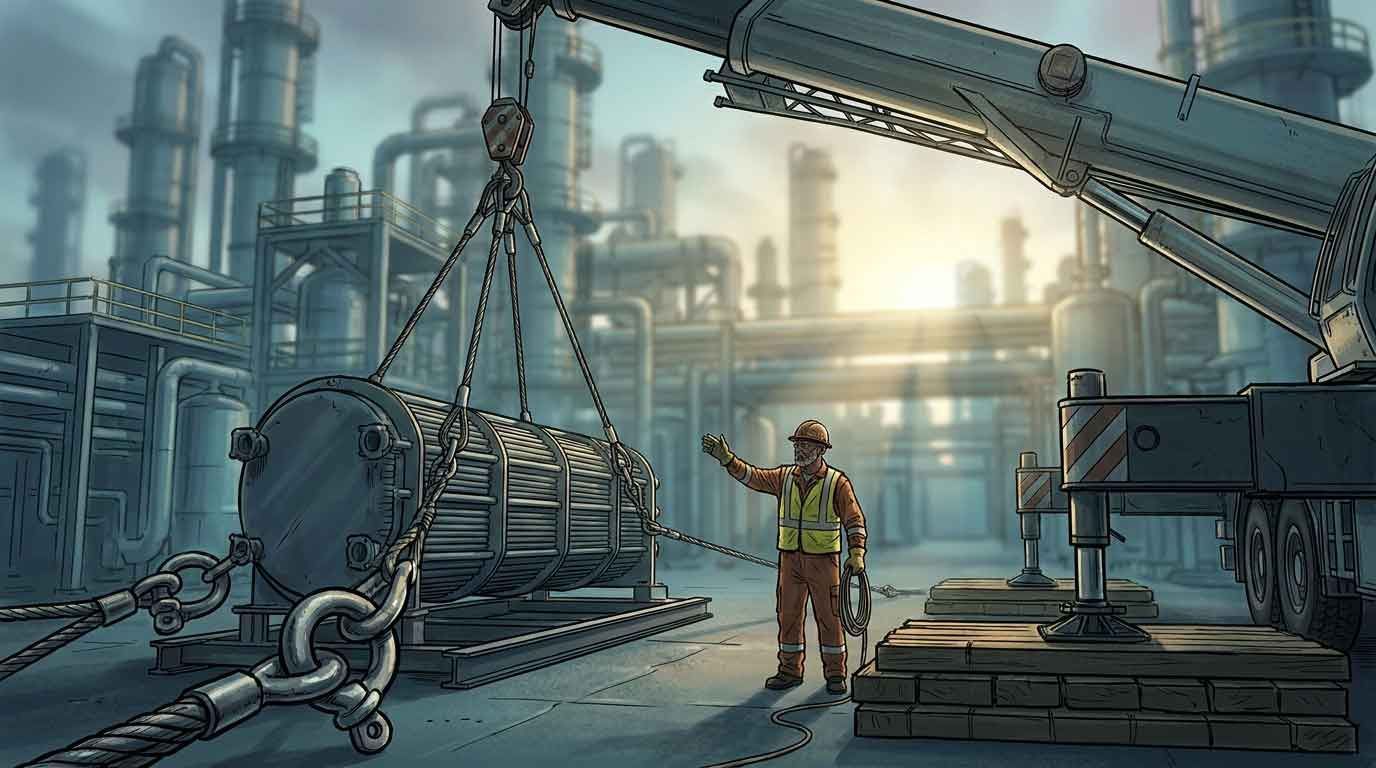
crane and rigging company websites is page after page built for ranking and almost nothing built for citation. When a plant manager asks an assistant which outfit can set an exchanger bundle inside a congested unit during a turnaround, the assistant is not querying a directory. It assembles an answer out of text it can read and repeat.
What a Crane or Rigging Firm Has to Make Extractable
The companies that get named publish what a prequalification packet asks for, in web text instead of a capability statement nobody outside the bid list opens.
- Fleet listed unit by unit: crane type, rated capacity in tons, main boom length, jib configuration, counterweight. A model can match "275 ton all terrain" to a question. It cannot do anything with "a modern fleet of late model cranes."
- Load chart and reach data written into page content, not locked in a spec sheet download.
- Certifications named and attached to roles: CCO certified operators through NCCCO, qualified riggers, signalpersons, and whoever serves as lift director.
- The standards the company works to, spelled out. OSHA 29 CFR 1926 Subpart CC for construction cranes, ASME B30.5 for mobile cranes, and the inspection intervals that come with them.
- Prequalification status stated plainly. ISNetworld, Avetta, Veriforce, and any owner-specific system the plants in the region run.
- Service model in the buyer's language: operated and maintained rental, bare rental, engineered lift plans, critical lift planning, machinery moving, millwright support, permitted transport.
- Service area as counties, metro areas, and named industrial corridors, plus how far the fleet mobilizes.
Every item there is a fact a machine can lift out of a sentence and repeat. That is the bar for
AI search optimization that reaches industrial buyers, and the same bar that trips up
heavy equipment dealer websites built around inventory feeds with no capability text behind them.
The entity side gets skipped more often than the content side. A company named one way on its site, another way on its DOT authority, and a third way on an association member page reads as three weak signals instead of one strong one.
Why Safety Credentials in a Brochure Never Surface
Safety is the first filter a plant manager applies and the last thing many crane companies make readable. The credentials exist. They sit in a PDF capability statement, a scanned certificate image, a portal behind a login, or a safety page that says the company is committed to a culture of safety and stops there.
A model cannot read a scanned certificate. It sees a picture and moves on. It cannot open a gated portal. And it has no way to turn "safety is our top priority" into an answer, because that sentence is true of anyone in the category.
Specificity feels narrowing to an owner who does not want to turn work away. In AI search it runs the other way. A company that names its crane classes, its service models, and a defined radius is eligible for a lot of questions. A company that names none is eligible for the ones where a competitor gets recommended.
A Readiness Checklist
This is what I run a crane site against before calling AI visibility a technical problem.
- Can a reader see every crane in the fleet, with capacity and boom length, without opening a PDF?
- Are operator, rigger, and signalperson certifications named, or shown only as logo badges?
- Does the site state the standards the company works to by number?
- Is the prequalification status published where a buyer can read it?
- Are the service models named the way procurement asks for them?
- Is the service area stated in geography, not in the phrase "and surrounding areas"?
- Do the legal name, address, and phone match across the site, Google Business Profile, DOT records, and association directories?
Every no is a place where a model has to guess. Models that guess tend to leave the company out.
Making a Crane Company Easy for an Engine to Describe
None of this changes what the company is. It is a translation job. The knowledge already exists in the prequal packet, the lift plans, and the answers an owner gives from memory when a plant calls. The work is moving it into pages a search engine, a language model, and a maintenance manager can all read the same way.
The payoff is not limited to AI answers. The same detail that makes a company citable shortens the qualification call, because the caller already knows the fleet can do the lift.
How Mansfield Can Help
Mansfield Marketing works with crane, rigging, and heavy lift companies to restructure website content around fleet capacity, safety credentials, service models, and coverage area, so AI engines and plant buyers can both describe the company accurately. Contact Mansfield Marketing to discuss making your crane and rigging company citable for the lift questions your buyers are asking by
requesting a quote or calling us at (713) 936-5557.