The First Question Plate Buyers Ask
Before a heavy plate buyer asks about quality, they usually ask something simpler: can this shop physically handle the job? In my experience, that question comes early because it rules shops out fastest. A plate thickness the rolls can't form, or a weldment the cranes can't lift, ends the conversation before anyone talks about weld procedures.
What I see on many heavy plate websites is that the question goes unanswered. The pages say "heavy fabrication capabilities" and "large-scale projects," show a photo of a big bay, and stop. Among the
manufacturing companies I focus on, plate fabricators have some of the most specific, most checkable capacity data of any sector. It just rarely makes it online.
The Numbers That Qualify or Disqualify a Shop
An engineer sizing up
heavy plate fabrication shops is running a checklist, whether it's written down or not. The items are physical limits, not adjectives:
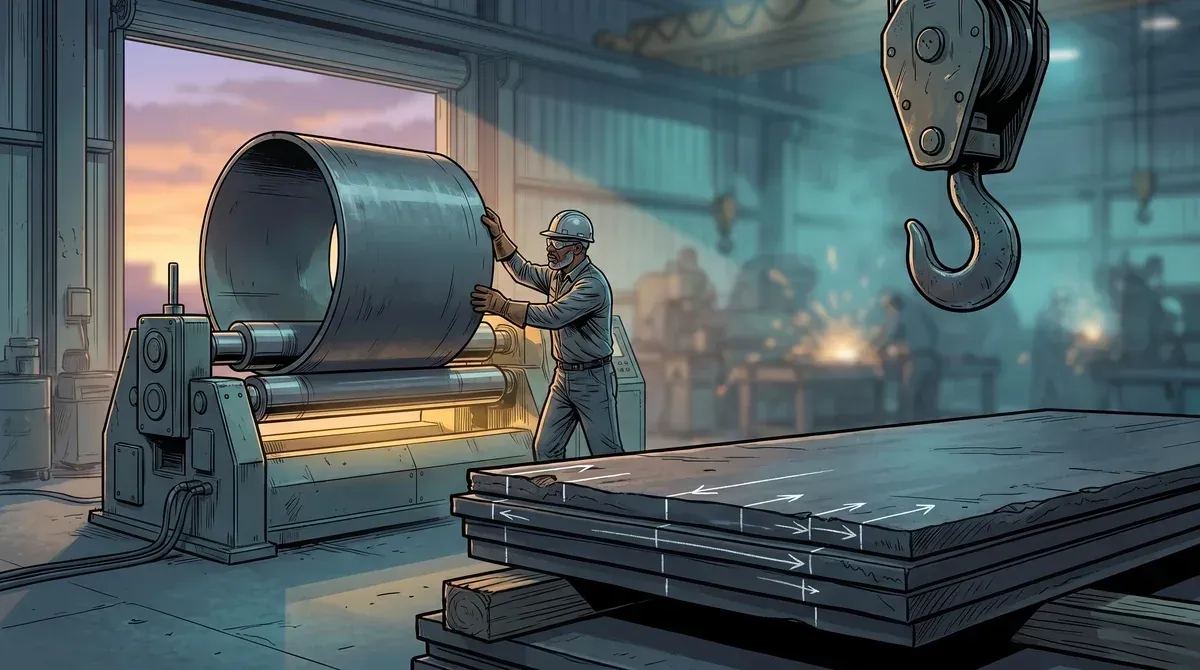
- Maximum plate thickness and width the rolls can form, and the minimum diameter at that thickness
- Press brake tonnage and bed length
- Cutting thickness by process: plasma, oxy-fuel, waterjet, laser
- Crane capacity and hook height in each bay
- Bay dimensions and door clearances
- Maximum ship-loose weight
- Rail spur or barge access for loads that can't go by truck
Heavy fabricators commonly describe their cranes as "high capacity" without a number. That's the gap. A buyer with a 40-ton assembly doesn't need to hear that the cranes are big. They need to know the capacity, and whether there's enough hook height to turn the part over.
The same problem shows up at shops that do both plate work and general
welding and fabrication. When the site lists both without separating capacity by bay or process, the buyer can't tell which work fits where.
What Happens When a Buyer Can't Confirm Capacity
One of two things. The buyer calls a larger competitor whose website did list the numbers, even if that shop is farther away or more expensive. Or the buyer schedules a shop tour to see for themselves.
The tour sounds like a win. It isn't always. It costs the buyer a day of travel and the shop a day of someone's time, and sometimes it ends with the buyer learning the rolls top out half an inch short. A table on the website could have answered that in thirty seconds.
And the shops that lose work this way rarely know it happened. The call that never came doesn't show up in any report.
What to Publish, and How to Name It
The fix is to put capacity data on the website as page text and tables, not in a brochure PDF or a photo of an equipment list. What I recommend publishing:
- An equipment table with real limits: roll capacity by thickness and width, brake tonnage and length, cutting thickness by process.
- A lifting and handling section: crane capacity and hook height per bay, bay dimensions, maximum ship-loose weight, and shipping access by truck, rail, or barge.
- Credentials, named correctly. For pressure work, that's the ASME Certification Mark with the U or U2 Designator, which replaced the old code symbol stamps in 2017. "U stamp" is fine as the shop-floor term, but the formal name is what an informed buyer expects to read. The R for repairs and alterations is a National Board Certificate of Authorization, not an ASME credential. AWS D1.1 covers structural steel welding. AISC runs several distinct certification programs, so name the specific one the shop holds instead of writing "AISC certified."
- Representative jobs described by size and weight, even when the customer can't be named.
Getting credential names right matters more than it looks. A quality engineer who reads "ASME certified" knows it isn't quite accurate, and that small error colors how they read everything else on the page.
Why the Same Data Feeds AI Search
Some engineers now start supplier searches by asking an AI tool in plain language: fabricators that can roll 3-inch plate, or shops that can lift and ship a 70-ton vessel by barge.
An AI tool can only recommend a shop for that question if the answer is written somewhere it can read. A table on a capabilities page is readable. A number inside a scanned brochure, or no number at all, is not. The data that answers a human buyer's first question is the same data that puts the shop on the machine's shortlist.
Let the Tour Confirm What the Website Proved
The shop tour still matters. It's where a buyer sees the housekeeping, meets the people, and judges whether the operation runs the way it claims. But it works best as confirmation. When the website has already proved the shop can handle the job, the tour becomes the last step before a purchase order instead of the first step in qualification.
How Mansfield Can Help
Mansfield Marketing helps heavy plate fabricators turn equipment limits, lifting capacity, and code credentials into website content that buyers and AI tools can read, as part of a holistic marketing strategy. Contact Mansfield Marketing to discuss publishing shop capacity where buyers check first by
requesting a quote or calling us at (713) 936-5557.