The Competitor That's Almost Right
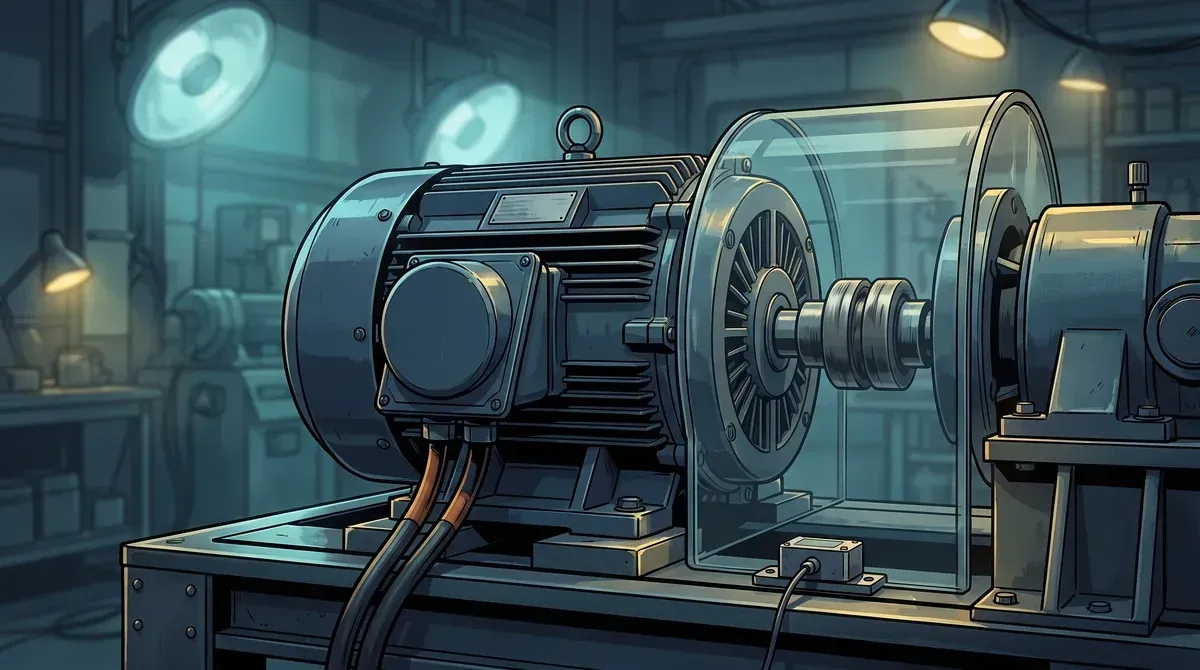
A custom motor or generator maker's real competition usually isn't another custom shop. It's the large catalog brand whose standard product is almost right, ships quickly, and is easy to buy through a distributor the customer already uses.
For many applications, almost right is fine. That's the market the catalog brands own. Among
manufacturing companies that build to order, I see custom motor makers try to compete there on price and features. It's a fight the catalog usually wins.
When Almost Right Isn't Good Enough
The custom opportunity starts where the catalog stops. Common situations include:
- Unusual duty cycles, such as frequent starts, high-inertia loads, or intermittent overloads
- Space or mounting constraints a standard frame won't fit
- Hazardous locations or washdown environments
- Efficiency targets the standard product can't meet
- Replacement of an obsolete unit where the original frame, shaft, or mounting has to match
Each one is a point where an engineer stops shopping the catalog and starts looking for help. That's the moment
custom electric motor and generator manufacturers need to be ready for. Equipment builders run into it too. An
industrial pump manufacturer with a demanding duty point or a tight package may need a motor that no catalog lists.
The 2027 Efficiency Rule Is a Reason to Re-Specify
DOE's final rule on electric motor efficiency, published in October 2023, applies to motors manufactured on or after June 1, 2027. It raises many 100 to 250 horsepower motors to IE4 efficiency levels, regulates air-over motors for the first time, and extends coverage to motors up to 750 horsepower.
When a compliant replacement doesn't fit the old envelope or the old duty, the buyer has to re-specify. And a re-specification is exactly when a custom shop can get into the conversation.
Market to the Moment the Catalog Fails
The mistake is marketing custom motors as a premium version of the catalog product. That invites a price comparison the custom shop loses.
The better approach is to market to the moment the catalog product fails the spec. That means writing about problems, not products. The motor that overheats on a high-cycle application. The replacement that won't fit the existing mount. The hazardous area that rules out the standard enclosure.
What to Publish
What I recommend putting on the website, in plain text:
- The application problems the company solves, each on its own page where possible
- Power ranges, plus NEMA or IEC frame ranges
- Enclosure types, such as TEFC, ODP, and explosion-proof, and the IP ratings available
- Hazardous location ratings the company can build to
- Efficiency levels offered, including IE4 where available
- Engineering support: what the engineering team does before an order, and how to start that conversation
- Realistic lead times for custom and modified units
How Application Pages Get Found
An engineer with a motor problem searches the problem. "Motor overheating on frequent starts." "Explosion-proof motor for a nonstandard frame." Some now ask AI tools the same question.
A company that has written about those specific problems in plain language gives search engines and AI tools something to match. A catalog-style product page with frame sizes and no context usually doesn't.
Custom Is the Answer to a Specific Problem
Custom isn't a premium alternative to the catalog. It's the answer when the catalog can't solve the problem. Companies that market it that way stop competing on price with brands they can't beat on price, and start showing up at the moment they're needed.
How Mansfield Can Help
Mansfield Marketing helps custom motor and generator manufacturers build application-focused content that reaches engineers when the catalog product falls short, as part of a holistic marketing strategy. Contact Mansfield Marketing to discuss marketing custom motors and generators against catalog brands by
requesting a quote or calling us at (713) 936-5557.