Fleet Size Stopped Being the Pitch
Buyers of heavy equipment and rental fleets don't choose a dealer because of how many machines sit on the yard. They choose based on what happens the day a machine goes down. Uptime, support response, and the total cost of downtime decide who gets the call. Fleet size decides almost nothing.
What I see across
equipment dealer marketing is still built around older assumptions: photos of the lot, a running list of makes and models, a used-inventory search tool bolted onto the homepage. That approach made sense when buyers shopped by browsing whatever sat closest. It doesn't match how contractors, fleet managers, and procurement teams evaluate a
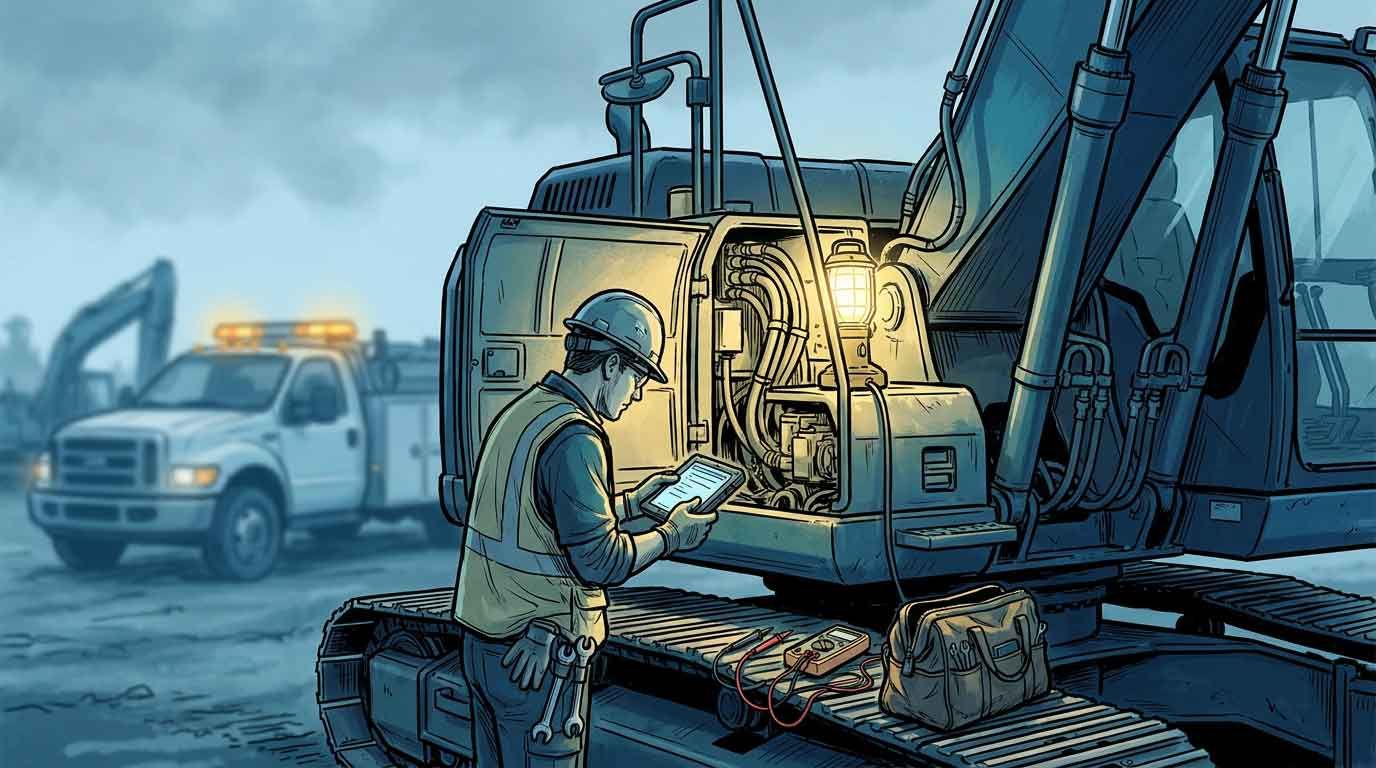
heavy equipment partner now. The question they're actually asking is different: if this machine fails on a Tuesday afternoon, how fast can this dealer get me back to work, and what does it cost me while I wait.
That question changes what belongs on the homepage. Parts availability. Service response time. Field technician coverage. Those are the details a buyer needs before signing a contract, and most dealer sites bury them under a rotating hero image and a phone number in the footer.
Rebuilding the Pitch Around Availability, Not Acreage
I approach this the same way I approach any commoditized product category: find what buyers actually decide on, then build the marketing around that instead of whatever's easiest to photograph. A contractor renting a compact track loader isn't really buying steel and hydraulics. They're buying assurance the machine runs on the days it's scheduled, and that someone shows up fast if it doesn't.
Rental fleets that market around availability, same-day swap policy, service radius, technician response windows, win deals that pure price competition loses.
Service network coverage deserves its own page, not a line item in the footer. Where are the branches. How far is the farthest jobsite from a service truck. What's covered under a maintenance agreement versus billed separately. A buyer comparing two dealers with similar equipment lists picks the one that answers these questions without a phone call.
Some of this content is straightforward to build, and dealers still skip it. A service coverage map. A parts stocking philosophy stated in plain language. A page describing what a maintenance contract actually includes. None of it requires a redesign. It requires deciding to lead with operational reliability instead of a spec sheet.
Proof Elements That Signal Uptime Credibility
A reliability claim doesn't need a number attached to be credible. What buyers look for is evidence the dealer has built systems around uptime, not just a promise on a landing page. What I've found tends to carry weight:
- A published service response commitment, stated as policy, not a vague promise
- A parts stocking approach that names what's kept in local inventory versus what gets ordered
- Factory-trained technician certifications listed by equipment brand
- A visible service coverage area or branch map
- Mobile and field service capability described in specific terms, not just "we come to you"
- Maintenance or uptime agreements tied into rental and purchase contracts
Each item on that list is something a dealer can publish today without inventing a statistic. It just requires stating what's already true about how the operation runs.
Leading With What Buyers Actually Decide On
This is a positioning fix more than a content overhaul. It means moving service network strength, response time, and parts logistics out of the "About Us" page and into the primary pitch, ahead of the equipment lists rather than beneath them.
What I've noticed is dealers who make that shift stop competing purely on price and lot size. They start competing on the thing that actually determines whether a customer calls again: whether the machine works when it's needed.
How Mansfield Can Help
Mansfield Marketing works with equipment dealers and rental yards to reposition their marketing around service network strength and downtime economics as part of a holistic strategy, not a one-off website refresh. We identify the availability, response time, and parts logistics details that need to move to the front of the site. Contact Mansfield Marketing to discuss repositioning your heavy equipment dealership marketing around uptime by
requesting a quote or calling us at (713) 936-5557.