The Disconnect Between Leads and Sales
As a B2B business owner in Houston, you’re likely doing a lot of things right. You’ve built a solid digital Foundation—a professional website and active LinkedIn profile. You’re investing in Awareness, creating content and maybe running some ads to drive traffic. You’re getting inquiries and quote requests. But then... nothing. You’re generating opportunities, but you’re just not closing enough deals.This is one of the most frustrating positions to be in. It’s a major pain point I hear constantly: "I know my B2B marketing is working. I'm getting leads, but they're not converting into paying customers." This often leads to the next question: "What should my sales closing rate even be?"
Defining the Metric: Lead vs. Opportunity
This is where most of the confusion starts. You might see broad "lead-to-sale" conversion rates of 1-3%, but that’s not what we're talking about. That tracks the entire funnel, from the first time someone downloads a whitepaper to a signed contract.
I'm focused on the "bottom of the funnel" pain point: prospects who have already raised their hands. They’ve requested a quote, sat in a meeting, or are otherwise in your active pipeline. These are Sales Qualified Leads (SQLs), or Opportunities .
So, what's the average SQL-to-Close rate?
According to industry analysts at Growth Orbit, an average B2B company closes approximately
20% of its sales-qualified opportunities. Best-in-class companies hit
30% .
A 2025 report from First Page Sage on SQL-to-Closed-Won rates gives us even more specific benchmarks:
If your company's close rate on qualified opportunities is significantly below these numbers, you may have a critical leak.
Why Your Qualified Leads Are Leaking to Competitors
You are spending a lot of effort and sometimes expensive advertising dollars to generate those SQLs. It's incredibly frustrating when a small percentage of those become a sale. These aren't cold leads; these are people who are ready to buy.
In my experience, this is almost always a symptom of a weak
Differentiation component in your marketing framework.
Failure to achieve differentiation at this stage is catastrophic. You risk spending your time and money educating a qualified prospect, only to have them buy from a competitor who does a better job of standing out. You’ve warmed them up, and your competitor closed the deal.
My Experience with "Real" Differentiation
Before I founded Mansfield Marketing, I spent years in B2B sales. My background was in commercial construction, and I earned my living on sales commissions. I learned very quickly that in a crowded marketplace, you can't just be an option; you have to become the only logical choice. I was forced to compel new clients to purchase our products over dozens of other vendors who, on the surface, looked exactly the same.
I had to answer the question, "Why should I choose you?" without using the same tired lines everyone else did.
This is one mistake I see businesses make. They try to differentiate with claims that are not differentiators at all. Things like:
- "We offer great customer service."
- "We're passionate about XYZ."
- "We provide free quotes."
- "We are the leaders in the XYZ industry"
These aren't differentiators; they are expectations. They are the minimum cost of entry to even be in the game. They don't give a customer a compelling reason to choose you.
How FADA® and E-E-A-T Create True Differentiation
In my
FADA® Marketing Framework , Differentiation is the "heat" in the fire triangle. Your
Foundation (website) is the fuel, and your
Awareness (marketing) is the oxygen. But without Differentiation—the heat—you will never ignite the "fire" of customer
Action .
This is also where FADA® perfectly aligns with Google's concept of E-E-A-T (Experience, Expertise, Authoritativeness, Trustworthiness). Differentiation is how you prove your unique E-E-A-T. You don't just say you have expertise; you show that your expertise is different and more valuable than anyone else's.
Here are 5 examples of good differentiators:
- Niche Down: Be a big fish in a small pond. Stop being a "generalist" and become a "specialist."
- Highlight a Proprietary Process: Do you have a unique, trademarked, or specific way of doing things that gets better results?
- Showcase Unique Certifications or Guarantees: Do you have certifications your competitors don't? Do you offer a guarantee they are too afraid to match?
- Specialize in a Unique Product/Method: Be the undisputed expert in one specific thing.
- Create an Unforgettable Customer Experience: Go beyond "good service" and create a memorable process, like a dedicated project dashboard, a video tutorial library for clients, or a handwritten thank-you from the artisan.
Here are three examples of how Houston B2B companies I work with can apply this:
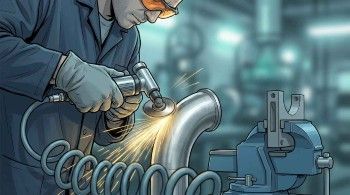
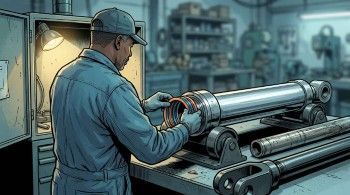
- The Industrial Machine Shop
- Weak Differentiation: "We have 30 years of experience and great service."
- Strong Differentiation: "We are the only ITAR-registered machine shop in the Houston area specializing in 5-axis precision machining for aerospace defense. We are ISO 9001 certified and guarantee ±0.0001” tolerance, minimizing your component failure rate."
- The Professional Service (Construction Law Firm)
- Weak Differentiation: "We're aggressive negotiators for our clients."
- Strong Differentiation: "We only handle construction-related contract disputes and lien-filing for general contractors in Texas. Our founding partner spent 15 years as a general contractor, so we understand your challenges from the job site, not just the courtroom."
- The B2B Contractor (Commercial HVAC)
- Weak Differentiation: "We offer 24/7 service and free inspections."
- Strong Differentiation: "We use a proprietary drone-based thermal scanning process to identify energy loss and potential failure points before they shut you down. We are the only Houston-area contractor to offer a 5-Year 'Uptime' Guarantee on all new commercial installations."
A Note on Using Multiple Differentiators
You shouldn't feel limited to a single differentiator. In fact, you can and probably should use as many as you can legitimately define, prove, and articulate. Think of these as a collection of reasons that, when combined, make your company the obvious choice. These differentiators can be put to use by supplementing the content on your existing website pages (like your "About" or "Services" pages). However, an even more powerful strategy is to create new, dedicated website pages for each one. For example, if your differentiator is a proprietary 5-step process, that process deserves its own page that is optimized to attract customers searching for that specific, detailed solution.
Stop Wasting Your Qualified Leads
My name is Doug Mansfield, and I’ve spent my entire career helping businesses answer that one critical question. Don't let your hard-won opportunities and expensive marketing efforts go to waste. Stop blending in.
True differentiation is the key to improving your sales conversion rate and earning more revenue from the same money and effort you’re already committing. It gives qualified, ready-to-buy customers a clear, logical reason to choose you and only you.
If you'd like to know what some practical differentiators might be for your business, just reach out to Mansfield Marketing for a no-hassle consultation.