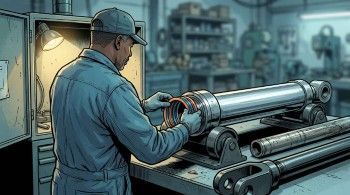
The Trap Is Set Before the RFQ Goes Out
A print goes out to five shops. Five numbers come back. Four of them sit close together and one comes in low. If nothing else on the table separates those suppliers, the low number wins, and the shop that won it has just taught that buyer the only thing worth comparing is price.
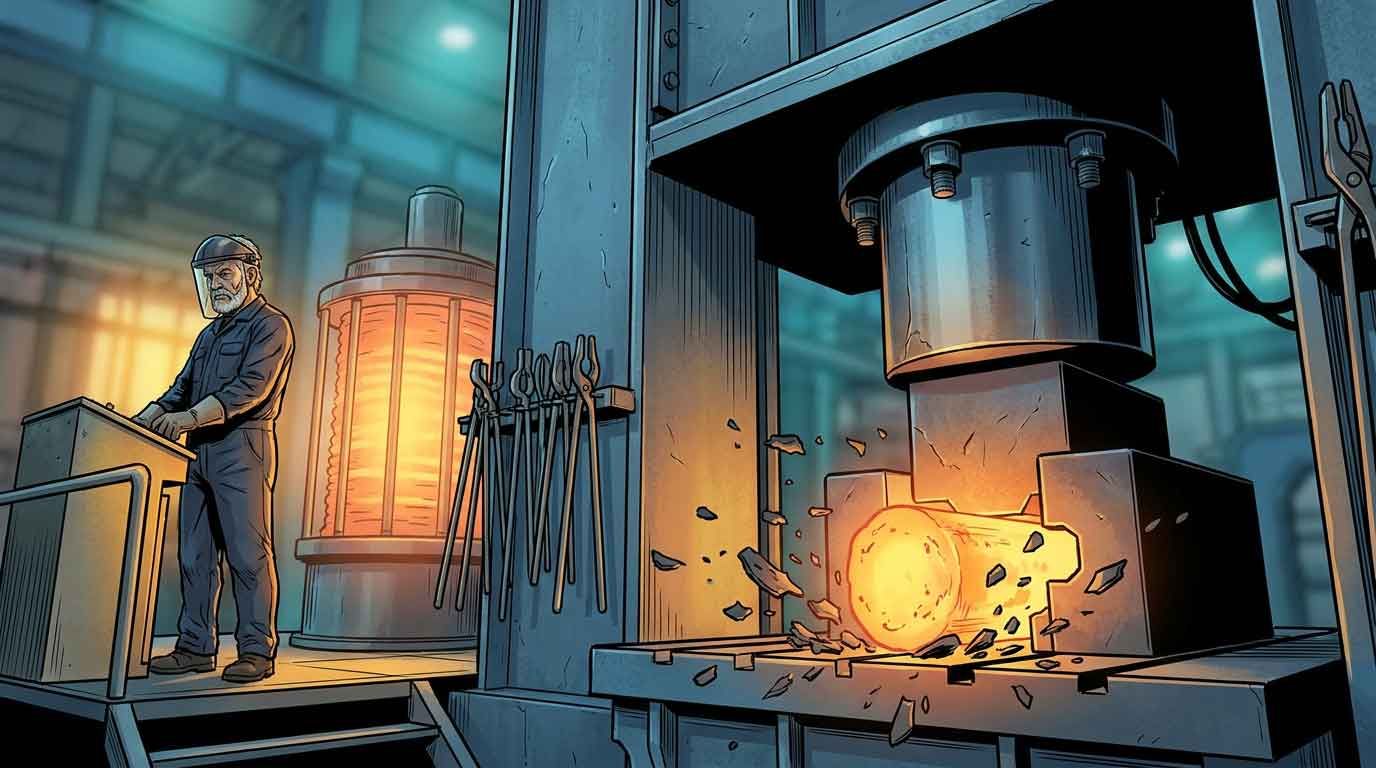
That is the commoditization trap, and forging and casting fall into it more easily than other processes. The part on the print looks like the same part no matter who makes it. It is not the same part. Grain flow, die design, alloy control, and the discipline behind heat treat all change how that component behaves in service. None of that shows up in a number on a quote sheet.
So the work starts earlier than the quote. By the time an RFQ is written, the buyer has already settled what the comparison is going to be about. What I see across
manufacturing supplier websites is a capability list that names equipment and says nothing about outcomes. Press tonnage, forging envelope, alloys run, secondary operations offered. All of it true. None of it an argument. When
custom forging shops publish only what they own, a buyer has no reason to believe that two shops with the same press are different suppliers.
What the Buyer Is Actually Comparing
Price is the axis buyers use when nobody has given them a second one. And the second axis already exists, because the people standing around that buyer are asking about it.
The design engineer wants to know whether grain structure holds under the load case. The quality manager wants PPAP history, first article inspection, and material test reports that arrive without being chased. The cost engineer is building a total part cost that includes scrap, secondary machining, and the parts that come back six months later. Purchasing owns the PO. Purchasing rarely owns the decision alone.
Defect rate is the sharpest of these, and in die casting it usually means porosity. Porosity is decided by gating design, vacuum assist, melt handling, and process control, not by the price of the alloy. A
die casting supplier that explains how it controls porosity, and what it does with a part that fails, is answering the question an engineer would otherwise raise on a qualification call. Answering it early moves the conversation off the number.
Delivery works the same way. Tooling lead time and repeat-run lead time are two different promises, and a shop that separates them in public sounds like a shop that measures them.
The Angles Many Metal-Forming Shops Leave Off
Here is what tends to be missing, in rough order of how much weight it carries with a technical buyer.
- Process control stated as practice. SPC on the characteristics the customer cares about, who reviews the charts, and what happens when one drifts.
- Metallurgy as an outcome rather than a service line. In-house met lab, grain flow verification, and which NDT methods run under the roof instead of at a subcontractor.
- A containment story. How a nonconformance gets caught, contained, and closed out, and whether 8D corrective action is routine or improvised.
- Documentation depth and speed. MTRs, FAI, and the PPAP levels the shop submits without building a special project around it.
- Delivery mechanics. Tooling lead time and repeat-order lead time listed separately, plus how an expedite actually gets handled.
- Secondary operations in house. Heat treat, machining, finishing, and what that removes from the buyer's coordination load.
- Certification scope rather than certification badges. ISO 9001, IATF 16949, AS9100D, and NADCAP for special processes, each shown with the scope it covers.
None of that claims to be better than the shop down the road. It is evidence. Evidence is what a buyer needs in order to justify paying more, because a purchasing manager who wants to award to the higher quote has to defend that choice to somebody upstairs. Give them the material to defend it with.
Making the Case Before the Quote
This is fixable, and it does not take a new pitch. It takes publishing what the shop already knows. The metallurgical reasoning, the process control practice, the containment method, and the delivery record are all sitting inside the business already. They rarely make it onto the website, because internally they feel like table stakes rather than differentiation.
They are not table stakes to somebody holding five quotes. They are the only thing on the page that is hard to copy.
How Mansfield Can Help
Mansfield Marketing works with forging operations and die casters to move technical proof out of the quote conversation and onto the pages buyers read before an RFQ is ever written. We identify which process, metallurgical, and quality details carry weight with the engineers and quality managers standing behind the purchase order, then structure them so search engines and AI answer tools can find and cite them. Contact Mansfield Marketing to discuss positioning your forging or die casting shop on demonstrated capability instead of price by
requesting a quote or calling us at (713) 936-5557.