Why the Distributor Ranks and the Repair Shop Does Not
A maintenance manager with a down excavator searches for hydraulic cylinder repair. What comes back is a wall of national distributors. Catalog houses that will sell a replacement cylinder, quote a pump off a shelf, and send the actual rebuild out to a specialist.
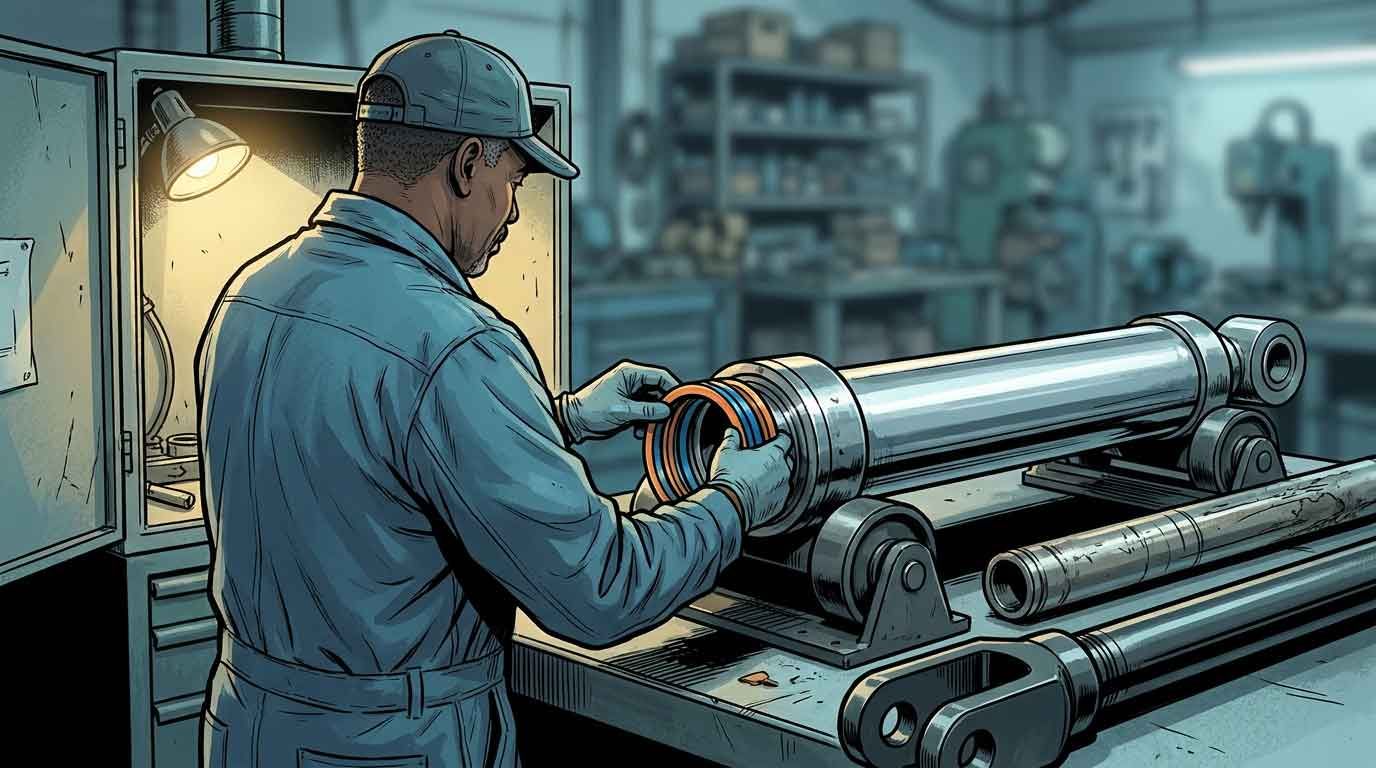
The specialist that hones the barrel, replaces the chrome rod, presses new seals, and load tests the unit on a stand before it ships is often sitting on page two.
That is not a ranking accident, and it is not a quality problem. Distributors publish enormous amounts of structured product content. Part numbers, bore and stroke tables, cross-reference charts, brand pages. Search engines and AI answer engines read that volume as topical coverage, and nothing on a thin specialist site argues otherwise.
What I see on specialist sites is the opposite pattern. One services page that reads "hydraulic repair, pneumatic repair, hose assemblies, field service" followed by a phone number. That page tells an engine almost nothing about depth. It lists categories. Distributors list categories too, and they list ten thousand of them.
Competing on breadth against a company whose entire business model is breadth is a losing position, and breaking out of it is what
hydraulic services marketing has to accomplish. The rest of the
energy sector marketing problem rhymes with it, but hydraulics is where the mismatch is sharpest, because the specialist does the harder technical work and gets the smaller share of the visibility.
What a Specialist Actually Competes On
Three things, and none of them are catalog size.
Repair depth is the first. In house honing, rod rechroming or replacement, machining oversize glands, rebuilding servo and proportional valves, pump and motor teardown with a test stand to prove the unit before it ships. A distributor can quote a new unit. A specialist can tell a plant engineer why the old one failed.
Turnaround is the second. When a press is down or a rig is waiting, the buying decision changes shape. Few buyers are comparing unit price at that point. They want to know whether the shop can pull the cylinder today, whether the seals are on the shelf, and whether the field service truck runs after hours.
Application expertise is the third, and it is the hardest one to fake. Knowing what kills cylinders on a hydraulic breaker versus what kills them on an injection molding press. Knowing that contamination control on a mobile machine is a different conversation than contamination control at a paper mill. I see this same dynamic among
oilfield equipment suppliers, where the company with real field knowledge loses the search to the company with the bigger parts catalog.
Structuring a Site Around Capability Instead of Category
Engines associate a site with specialized capability when the site states that capability in specific, checkable terms. What I recommend is separate pages for separate work, not one services page carrying all of it.
A cylinder repair page should name the bore and stroke ranges the shop handles, the largest unit the crane in the bay can lift, honing capacity, whether chrome work happens in house or goes out, seal brands stocked, and the pressure the test stand can reach. A pump and motor page should name the manufacturers rebuilt and the test capability behind that claim. A power unit page should describe reservoir sizes, filtration to a stated ISO cleanliness code, and whether design and build happen under one roof.
Failure content belongs on the site too. A short page answering why a cylinder drifts under load, or what a scored rod does to a fresh seal, is the kind of thing an answer engine can lift and attribute to a source. A catalog page cannot answer that question. A repair shop can.
Then add structured data, so the machine reading the page understands it as a service with defined capabilities and a defined service area rather than as a brochure.
The Searches Specialists Should Own
Distributors are hard to beat on part number and brand queries. The terms I would build toward instead are these:
- Repair type: hydraulic cylinder rebuild, pump and motor repair, servo valve repair, manifold and valve body repair
- Equipment specific: excavator boom cylinder repair, press cylinder rebuild, telescopic cylinder repair, mill type cylinder repair
- Failure and symptom: hydraulic cylinder drifting under load, rod seal leaking, pump running hot, system contamination
- Urgency: emergency hydraulic repair, same day cylinder rebuild, after hours field service
- Capability and spec: cylinder honing capacity, chrome rod replacement, hydraulic system flushing, test stand pressure rating
- Application: hydraulic power unit design and build, custom cylinder manufacturing, system troubleshooting
Those are the terms a buyer uses when the machine is stopped and the problem is real. They also carry almost no catalog competition, because a parts list has nothing useful to say about a drifting cylinder.
Building a Site That Names the Work
This gap is closable. It requires moving capability out of the shop's head and onto the page in language a buyer and an engine can both verify. Ranges, tolerances, test pressures, turnaround commitments, industries served, equipment types handled.
Sometimes a shop needs outside perspective to see what is missing. The details a hydraulic technician treats as obvious are the same details buyers use to separate a real repair house from a reseller, and those are usually the details left off the website.
How Mansfield Can Help
Mansfield Marketing works with industrial suppliers to restructure website content around demonstrated capability rather than category listings, as part of a holistic marketing strategy covering search, AI visibility, and structured data. Contact Mansfield Marketing to discuss positioning your hydraulic and fluid power capabilities where specifying buyers can find them by
requesting a quote or calling us at (713) 936-5557.