The Double-Edged Sword of Expertise
As a B2B business owner, you are the foremost expert in your field. You’ve spent years, maybe decades, mastering your craft, understanding the nuances of your industry, and solving complex problems for your clients. This deep expertise is your greatest asset. It’s also a double-edged sword.
Why You Can't See the Label from Inside the Bottle
When it comes to
marketing your own B2B business, that expert knowledge can inadvertently place you inside a bubble. You see the world as your years of experience have shaped it, using language and focusing on details that are second nature to you but may be completely foreign to your potential customers. You’re talking to your peers, not your prospects.
It is absolutely possible, and often beneficial, for you to be actively engaged in your marketing process. Your insight is invaluable. However, to be effective, you must recognize that your field of view has limitations and actively work to see your business from the outside in.
How to See Your Business from a Customer’s Perspective
Let's put this into practice. One of the most effective ways to escape the bubble is to use data to understand your customer's actual perspective and search intent. A powerful tool for this is Google's Keyword Planner. Yes, you need a Google Ads account to access it, but you don’t have to spend a single dollar on advertising to use its research features.
This tool helps you uncover the language your customers use when they are trying to solve a problem, the very problem your business exists to fix. It allows you to create content that speaks to your ideal new customer in a way that resonates and motivates them to act. Let's use an example.
The Scenario: The Machine Shop Owner
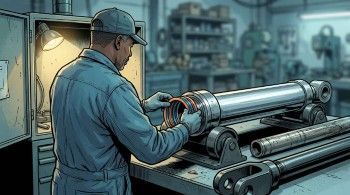
Imagine you own a
high-tech machine shop that caters to industrial clients. You're proud of your state-of-the-art 5-axis CNC machines and your tight tolerances. Inside your bubble, you might create website content and blog posts centered on topics like:
- "The Benefits of 5-Axis Machining for Complex Geometries"
- "Achieving Sub-Micron Tolerances with Our Haas UMC-750"
While technically accurate and impressive to another machinist, your potential customer—an engineer or a purchasing manager, likely isn't searching for those terms. They have a different problem in mind.
Here is a step-by-step guide to using Keyword Planner to bridge that gap:
- Brainstorm Customer Problems, Not Your Solutions. Instead of starting with your technical capabilities, think about the problems your clients have. They might need "custom industrial parts made," "a replacement for a broken machine component," or "a local shop for prototype manufacturing."
- Use Keyword Planner to Discover Their Language. Enter these problem-based phrases into the tool. Google will provide a list of related keywords that people are actually searching for, along with their monthly search volumes. You will likely discover that phrases like "custom metal fabrication services," "prototype machining Houston," or "industrial parts manufacturing" have significant search volume, while your highly technical terms have very little. This is your first look outside the bubble.
- Speak to Customers at Every Stage. Your marketing shouldn't only target the person who is ready to buy today. The most successful strategies engage prospects at different stages of their journey. Using the keyword data, you can identify different types of user intent:
- Informational Intent: The prospect is still understanding their problem. An engineer might search for "best materials for high-wear industrial parts." A blog post on this topic establishes your expertise and builds trust early on.
- Commercial Intent: The prospect is comparing solutions. They might search for "CNC machining vs 3D printing for prototypes." A comparison guide can position your service as the superior choice.
- Transactional Intent: The prospect is ready to buy. They are searching for "get a quote for custom parts" or "machine shops near me." Your main service pages should be optimized for these terms with clear calls-to-action.
By following this process, the machine shop owner can escape their bubble. They can continue to be the expert while creating a content strategy that meets customers where they are, using the language they understand, and guiding them through their entire decision-making process.
The Overlooked Benefit of a Marketing Partner
An often-overlooked benefit of hiring a marketing company is that your business will be evaluated from a trained, professional, outside perspective. At Mansfield Marketing, our process begins with due diligence. We immerse ourselves in your business and then use tools and expertise to see it the way your customers do.
We are trained to identify the blind spots created by the expert's bubble. We find ways to not only patch them but to build a more robust
Foundation and a more effective
Awareness strategy. By aligning your deep industry knowledge with a data-driven understanding of customer behavior, we enable your marketing plan to achieve its ultimate goal: increasing sales.
If you're ready for a marketing strategy that bridges the gap between your expertise and your customer's needs, let's talk.
Contact Mansfield Marketing today for a free evaluation to determine if we are the right fit for your business.