Technical Capability Is Not the Same as Production Readiness
A shop with solid equipment, experienced operators, and real certifications gets passed over for a production contract. A competitor with arguably less capability wins. What happened?
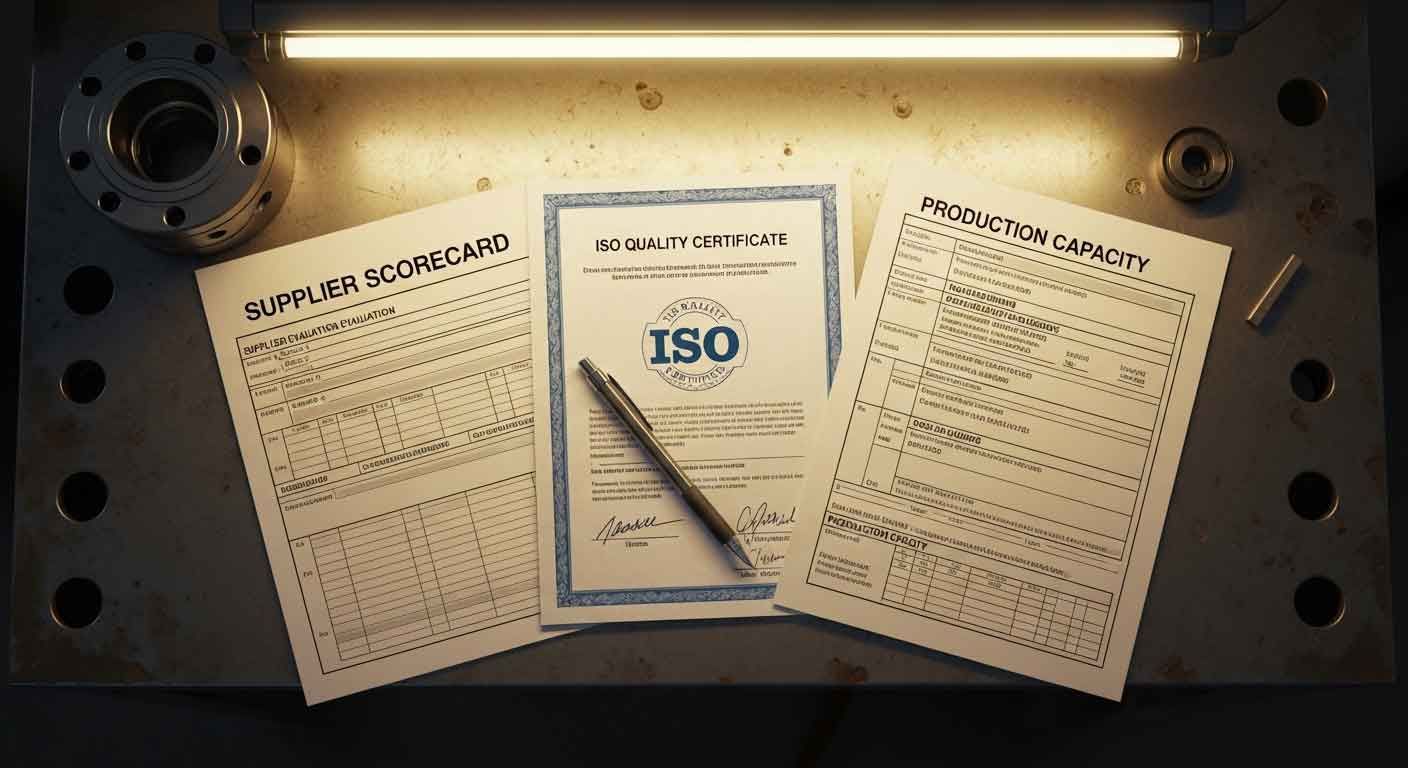
Communication. Specifically, the losing shop had a website that described what they could make but said nothing meaningful about how much they could make, under what conditions, or within what lead time framework. Production buyers work from a qualification checklist before they ever call. If your site doesn't answer those questions, they find one that does.
Manufacturing is full of companies in this position. Strong operations, weak digital communication of those operations.
What Production Buyers Actually Check Before Reaching Out
Procurement professionals sourcing manufacturers for production contracts aren't browsing for general awareness. They're eliminating options under deadline pressure. What they want to confirm before investing time in a conversation:
- Equipment count and shift structure (not just machine type or brand)
- Quality certifications: ISO 9001, AS9100, IATF 16949, NADCAP, or category-specific equivalents
- Minimum order quantities (MOQ) and whether they align with production volumes
- Lead time signals for production runs, not just prototype builds
- Quality infrastructure: inspection capabilities, SPC, first article process
- Throughput indicators and production run history
When that information is absent, many buyers don't ask. They move to the next shop on the list, one that already answered the questions.
Why Better Operations Lose to Stronger Communicators
Precision machining companies are particularly exposed here. Websites in that space often showcase tolerance ranges, finish quality, and equipment brand names, but leave out the capacity indicators procurement weighs first. How many machines are running simultaneously? What's the shift schedule? Can the shop absorb a 2,000-part monthly run or is it sized for prototype quantities?
Buyers won't ask a question your competitor already answered.
Welding and fabrication shows the same pattern. Two shops with comparable certifications and weld qualifications. One site shows certifications, materials, and a photo gallery. The other shows all of that, plus shift capacity, explicit production volume language, and throughput data. Second shop gets the RFQ more often than not. Not because it's operationally superior. Because it communicated more clearly.
What Manufacturing Websites Get Wrong About Production Readiness
Standard manufacturing website copy defaults to capability framing over production framing. These are aimed at different buyers.
Capability framing looks like: "We work with a wide range of materials and tolerances." "Our team brings decades of combined experience." "We serve aerospace, defense, and industrial markets."
None of that communicates production capacity. It communicates general competence to someone doing early-stage research. A procurement professional sourcing a 10,000-part Q3 production run isn't looking for versatility signals. They're looking for production signals.
Restructuring Content Around What Procurement Actually Checks
Getting
industrial marketing right for manufacturers means answering the procurement checklist before buyers have to ask. A few practical shifts in how content is structured:
Production language over capability language. "Our 12-machine CNC cell runs two shifts and handles production volumes from 500 to 50,000+ parts" tells a procurement buyer something meaningful. "Our precision machining capabilities include 5-axis CNC" tells them you have a machine. Only one of those answers the production question.
Certifications visible throughout, not buried. Buyers skim. Certification logos and designations need to appear in navigation, on the homepage, and on service pages, not just on a certifications tab that requires three clicks.
Lead time specificity. "Competitive lead times" means nothing. Buyers sourcing production contracts want to know if a shop can handle a 6-week PO cycle or whether 3 months is realistic. Naming that range separates production suppliers from general job shops in a buyer's mind.
Quality infrastructure details front-facing. Inspection equipment, first article inspection process, SPC capability, and quality documentation availability are qualifying information for production buyers. Many manufacturer websites treat this as supplementary content. Production buyers treat it as mandatory.
How Mansfield Marketing Can Help
Manufacturing companies lose production contracts they should win when their websites don't speak to how production buyers actually qualify suppliers. Mansfield Marketing works with manufacturers to restructure web content around procurement decision criteria, not just general capability. If your site is consistently attracting prototype inquiries when your operation is built for production volume, the mismatch is solvable.
Contact Mansfield Marketing or call (713) 936-5557 to discuss what needs to change.
Frequently Asked Questions
Does this apply to smaller manufacturers, or only large production facilities?
Production buyers apply the same qualification criteria regardless of company size. A 20-person shop with clear capacity language and visible certifications qualifies more often than a 200-person operation that communicates vaguely. Specificity matters more than scale.
My existing customers already know our capabilities. Why does the website matter?
Existing customers aren't the problem. New production buyers researching independently have no context for your operation beyond what your website communicates. If that information isn't production-specific, many buyers eliminate you before you're even aware you were being evaluated.
What's the most commonly missing information on manufacturing websites?
Capacity language. Machine count, shift structure, throughput volume, and MOQ. Manufacturing websites often describe what they can make without describing how much they can make or under what conditions. Production buyers need both.