How Do I Stop Getting Price-Shopping Quote Requests
I've see these emails in manufacturing consultations. Someone found you on Google, maybe through a directory, and they want a quote on 500 widgets. No drawings attached. No material spec. No tolerance callouts. Just "how much for 500 of these?"
These requests eat hours. Your estimator has to chase down specifications. Half the time the prospect ghosts after you send numbers. The other half, they're comparing you against a shop overseas or someone running equipment from the 1990s.
This is what happens when your marketing attracts price shoppers instead of qualification shoppers.
Two Types of Buyers Find Machine Shops Online
The first type needs parts made cheap. They're optimizing for lowest unit cost. Tolerance is "close enough." Material certification is optional. They'll switch vendors for a nickel per piece.
The second type needs parts made right. They're sourcing for aerospace primes, medical device manufacturers, automotive OEMs. Tolerance isn't negotiable. Material traceability is mandatory. Switching vendors means requalification headaches they'd rather avoid.
Your marketing decides which type finds you.
What Qualification-Based Buyers Actually Search For
Some
machine shop websites I review talk about capabilities the same way: "We offer CNC milling, CNC turning, Swiss machining, and EDM services." This tells a procurement engineer nothing useful. Every shop says this.
Qualification buyers search differently. I see them search for specifics:
"Machine shop AS9100 certified Houston"
"CNC machining titanium aerospace components"
"Medical device machining ISO 13485"
"Tight tolerance machining .0005"
Notice what's missing from those searches? The word "cheap." The word "affordable." Any mention of price at all.
These buyers aren't shopping price.
They're shopping capability. Your marketing needs to answer their actual questions.
Four Positioning Elements That Repel Price Shoppers
Tolerance Capability
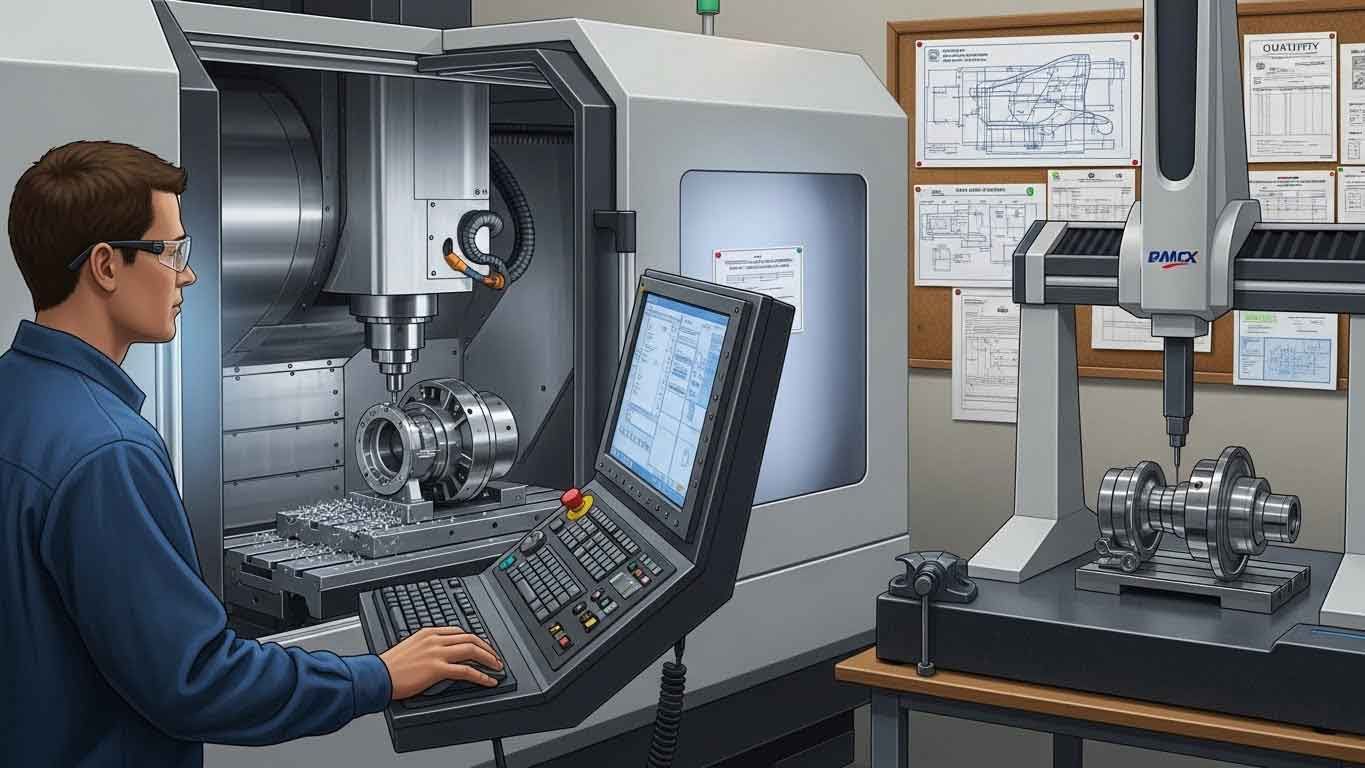
I ask shops: what's the tightest tolerance you can reliably hold? Not your best day with your best machinist on your newest equipment. What can you quote confidently and deliver consistently?
Put this on your website. Be specific. "We routinely hold ±.0005" on critical dimensions" tells an engineer something useful. "Precision machining services" tells them nothing.
If you can hold tighter tolerances than competitors, say so. If you specialize in a particular range, say that too. Engineers reading your site will self-select. The ones who need .005" tolerance for non-critical parts will find cheaper shops. The ones who need .0005" on flight hardware will call you.
Material Expertise
What materials do you actually run well? Not what you could theoretically machine. What do you have documented experience with?
Inconel, titanium, hardened steels, exotic alloys. Each requires specific tooling knowledge, speeds and feeds experience, and fixturing approaches. A shop that runs these materials daily will outperform a shop attempting them for the first time.
I recommend documenting this expertise. Case studies help, but even a simple list of materials with notes on your experience level signals competence to engineers evaluating you.
Documentation Quality
This separates shops chasing aerospace and medical work from shops chasing general commercial work. And it's where I see many shops lose bids they should win.
Buyers in regulated industries need:
First Article Inspection Reports
Material certifications with full traceability
Certificate of Conformance documentation
Process control records
If your documentation is clean and complete, say so prominently. If you have dedicated quality staff who handle this, mention it. I see shops that treat documentation as an afterthought lose to shops that treat it as a selling point.
Turnaround Reliability
On-time delivery matters more than fast delivery for most industrial buyers. A shop promising two weeks and delivering in three causes more problems than a shop promising four weeks and delivering in four.
What's your actual on-time delivery rate? If you track this and the number is good, publish it. If you don't track it, start. This single metric communicates operational maturity to buyers who've been burned by unreliable vendors.
How This Filters Your Inquiries
When your website leads with tolerance specs, material expertise, documentation capability, and delivery reliability, I see something change in the inquiry mix.
The "how much for 500 widgets" emails decrease. The emails with drawings attached, tolerance callouts highlighted, and questions about your quality system increase.
You quote fewer jobs but close a higher percentage. Your estimator spends less time chasing specifications and more time on serious opportunities. Your average job value increases because you're quoting for buyers who value capability, not buyers hunting for lowest price.
The Uncomfortable Truth About Price Competition
You can always find a shop willing to quote lower. Somewhere, someone is running older equipment with lower overhead and hungrier margins. You won't win a race to the bottom.
But I see shops that position on qualification don't enter that race. They compete on a different field entirely. The buyer comparing you against the cheapest quote isn't your buyer. The buyer comparing your certifications, your tolerance capability, and your documentation quality against qualified competitors is your buyer.
Your marketing should find the second buyer and let the first buyer find someone else.
What Changes on Your Website
I recommend reviewing your homepage and service pages with fresh eyes. Count how many times you mention price competitiveness versus how many times you mention specific capabilities.
If capability messaging is thin, fix it. Add your certifications prominently. Add your tolerance ranges specifically. Add your material expertise in detail. Add your quality documentation approach clearly.
The shops I see winning aerospace, medical, and high-spec automotive work aren't winning on price. They're winning on qualification. Your marketing should reflect that.
Frequently Asked Questions:
How do I stop getting price-shopping quote requests?
Position your website around specific capabilities rather than general services. Lead with tolerance ranges, material expertise, certifications, and documentation quality. Price shoppers self-select out when they see you're marketing to qualification buyers.
What should a machine shop website emphasize instead of price?
Four elements: tolerance capability with specific ranges, documented material expertise, quality documentation and certification capabilities, and on-time delivery reliability. These attract buyers sourcing for regulated industries who value precision over lowest bid.
Why do aerospace and medical buyers choose shops that aren't cheapest?
Requalification costs exceed any per-part savings. Buyers in regulated industries need shops that can hold tolerance, provide full material traceability, and deliver complete documentation packages. They'll pay more for reliability because vendor failures create compliance problems.